





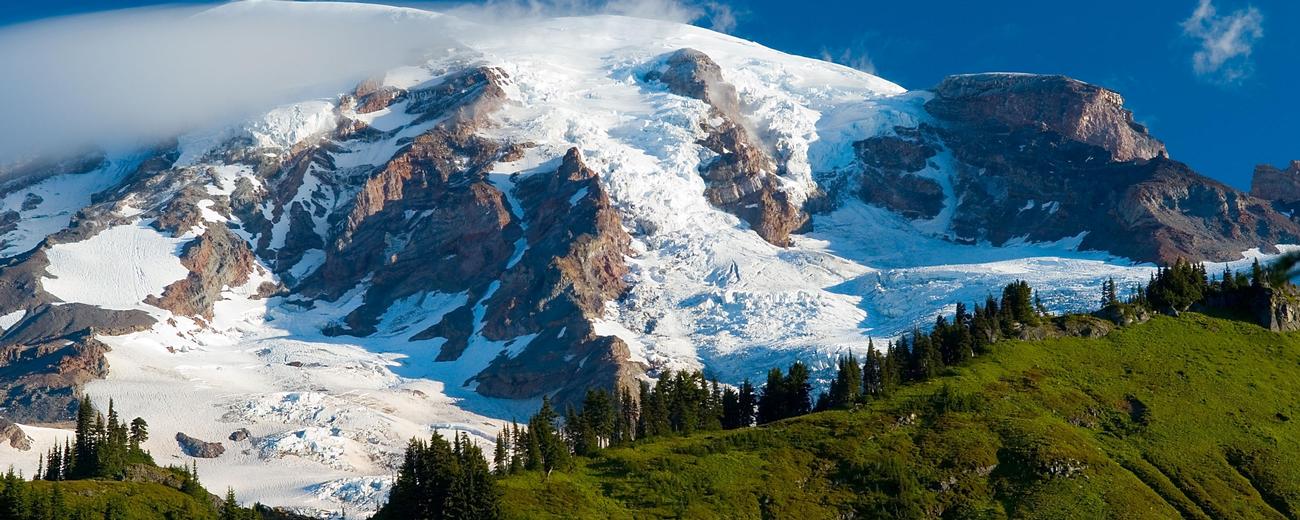





Mount Rainier scrapes sky at 14,110 feet, crowning Washington's central coast on a clear day with its regal snow-dusted summit, an active volcano covered in ice and powder as drama-prone in appearance as it is to climb. The glaciers that keep this peak white and cold year round stand in sharp contrast to the old-growth forests and sub-alpine meadows ringing the mountain's flanks during spring and summer. While visitors have little to fear these days from lava (the mountain hasn't seen an explosion in hundreds of years) storms form quickly on Rainier, taking the lives of many would-be climbers, even experienced mountaineers.
Three locations in the south provide access to the park, as does an entrance on the northwest side and another in the east. Most visitors to Mount Rainier are after a quick peek at the peak or some camping and hiking in the wilderness. Popular with hikers is Wonderland Trail, which circumvents the base of Mount Rainier in 93 miles. There are over 240 miles of trails through the park though, if you didn't pack the gear for this ten-day hike, many of them suitable for straight-forward half-day jaunts; be sure to secure the appropriate permits if you intend on doing any overnight camping outside of designated areas.
Climbers usually make their assault on the summit of Mount Rainier in season from Camp Muir. With views of Mount Adams, Mount St. Helens and Mount Hood, Muir itself is a solid overnight hike for those after altitude without the trappings of a full climbing expedition. Short paved trails cater to child-hikers and anyone less keen on heights.
In winter, the park is a paradise, strap on cross-country skis or a pair of snowshoes and explore.
Mount Rainier is 95 miles southeast of Seattle.